Digging deeper: Exploring soil biodiversity through environmental DNA
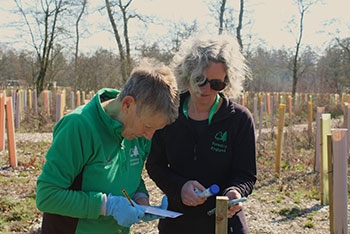
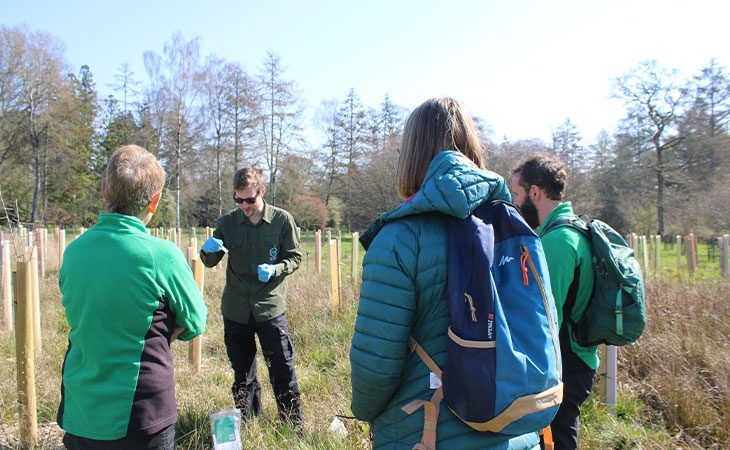
Recently, we ventured into Silk Wood with a mission to uncover the invisible life within the soil. With support from NatureMetrics, armed with sampling kits we collected soil samples for an environmental DNA (eDNA) study. Chris French, head of conservation at NatureMetrics, demonstrated the techniques to the team and volunteers. We collected samples from the community planting area, nest planting zones and coppiced woodland.
What is eDNA?
Well, environmental DNA refers to the genetic material that organisms leave behind in their environment through cells, tissues, secretions, and waste. Samples can be collected from a range of habitats, including the air and water. In terrestrial habitats, eDNA is present in the soil, where it breaks down over time depending on moisture, exposure to sunlight, temperature, and microbial activity.

Conventional biodiversity surveying techniques provide
important information about what species are present in a habitat, along with
their population size and age. However, eDNA allows for fast, non-invasive
detection of a wide variety of species from a single soil sample. It can often
identify rare or hard-to-detect species that other survey methods might
overlook, reduce time spent in the field, minimise habitat disturbance, and
streamline survey efforts.
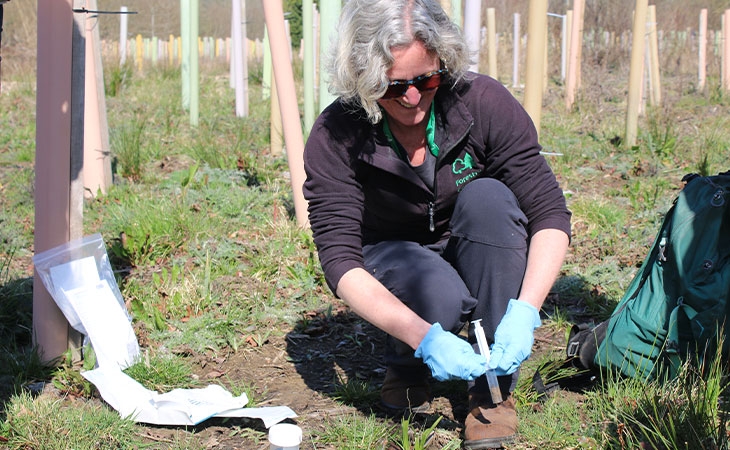
The sampling technique was fairly simple. We used modified syringes to collect soil cores from different areas at each site. These soil samples were added to a buffer solution to preserve the genetic material. It was really important to make sure that the samples weren't cross-contaminated, which could lead to false detections.
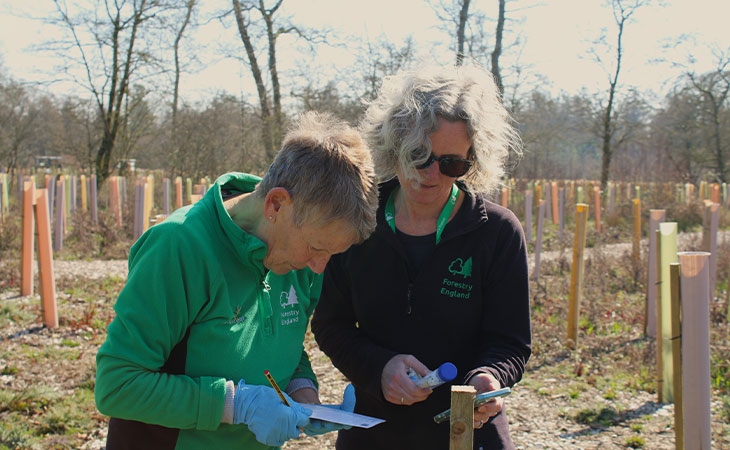
The next step in the process is to send the samples to the lab, where the eDNA is extracted from the mixed organic material. Specific genetic markers or ‘fingerprints’ that are unique to a particular species are then ‘amplified’ (using techniques like PCR) and sequenced. These sequences are compared against reference databases to identify which species (or groups of organisms) are present. This process, often called metabarcoding, allows scientists to detect a wide range of taxa from a single sample. Think CSI, but for detecting fungi and invertebrates!
With this study, we can gain a much more comprehensive picture of the biodiversity of the soil within Silk Wood. Stay tuned for the results!