Listening to the Landscape: What Birdsong Is Telling Us About Silk Wood
s part of the Silk Wood Community Planting Project, we are using sound as a tool to better understand how wildlife is responding to the evolving landscape. By working with Wilder Sensing, we have introduced remote audio recorders to the planting project site, allowing us to monitor bird biodiversity in a consistent, non-intrusive way alongside ongoing planting and volunteer activity.
Two recorders were installed across the Silk Wood planting site in November and programmed to capture birdsong during dawn chorus, sunrise and sunset, periods when bird activity is at its highest. The audio collected is analysed using machine learning technology, which identifies bird species from their calls and helps track patterns over time.
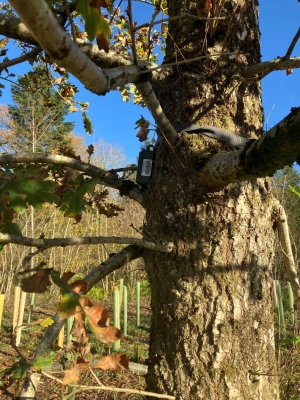
Audio recorders were placed in trees on the planting site. Photo by Amy Flower
Early results already indicate an
interesting soundscape. Analysis has identified over 50 bird species with a
high level of confidence and logged more than 3,900 individual calls, showing
that the planting site in Silk Wood is being used regularly by a diverse range
of birds, even while the woodland is still establishing and is distinctly
different from the rest of Silk Wood.
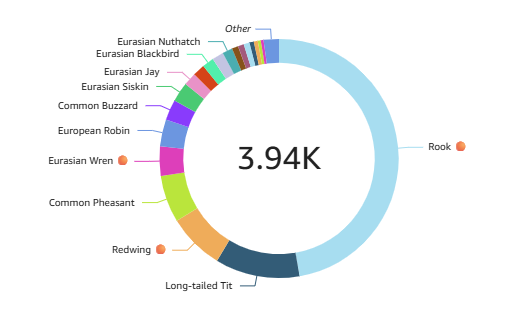
Pie chart: Number of identified bird calls
by species – Wilder sensing
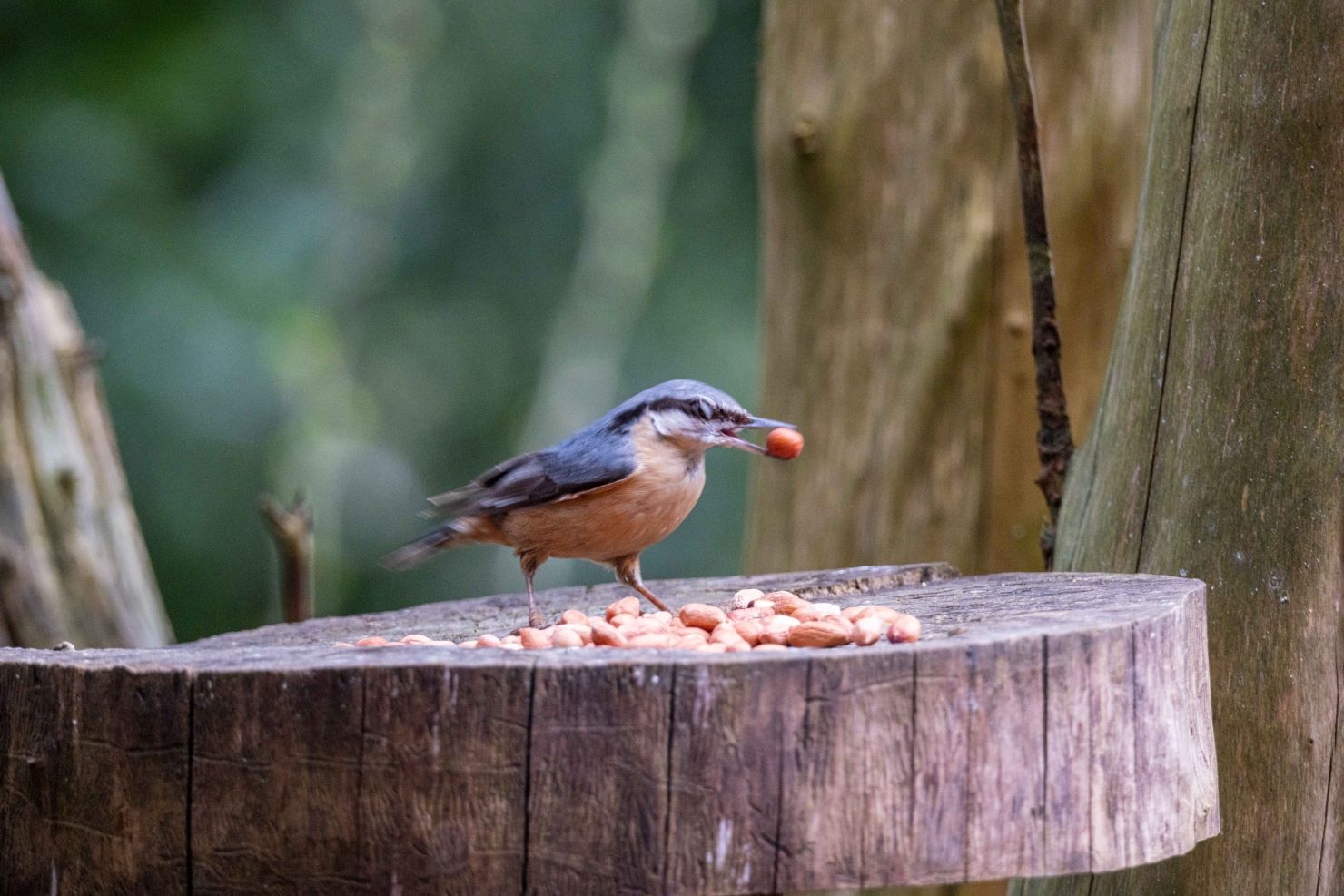
The rook (Corvus frugilegus) is the most frequently recorded, which is unsurprising given the local habitat of farmland with tall, scattered trees around the planting site. It is also exciting to see the presence of the Eurasian nuthatch ( Sitta europaea), and the elusive redwing ( Turdus iliacus), which is classified in the UK as ‘Amber’ under the Birds of Conservation Concern.
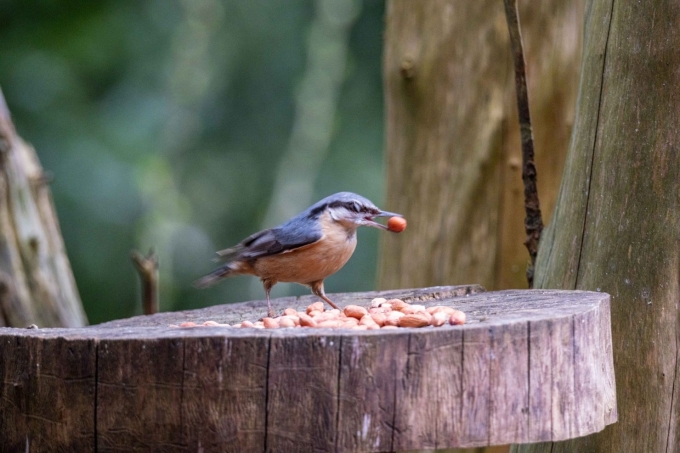
A Eurasian nuthatch at a feeding site at
Westonbirt Arboretum. Photo by Alison Whaley
You can test your bird call knowledge and listen to some of our audio recordings here: https://youtu.be/1BmW65xEnBE
This acoustic data adds depth to our wider monitoring of the site. Alongside year-round flora surveys carried out by volunteer teams, and camera traps, monitoring the audio recordings helps us understand not just how the habitat is developing, but how it is being used by wildlife day to day.