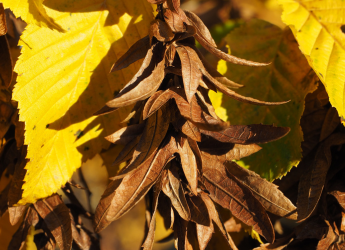
Tree of the Month: Common Hornbeam
Each month we’re bringing you a profile of one of the UK native tree species in the Silk Wood Community Planting Project – this month is the Common Hornbeam Carpinus betulus, a tree which makes up 10% of our species planted.
Mostly found in ancient woodlands, the hornbeam has the hardest timber of any tree in
Europe – which its common name suggests. In Old English, ‘horn’ can be also known to
mean hard, and ‘beam’ means tree.
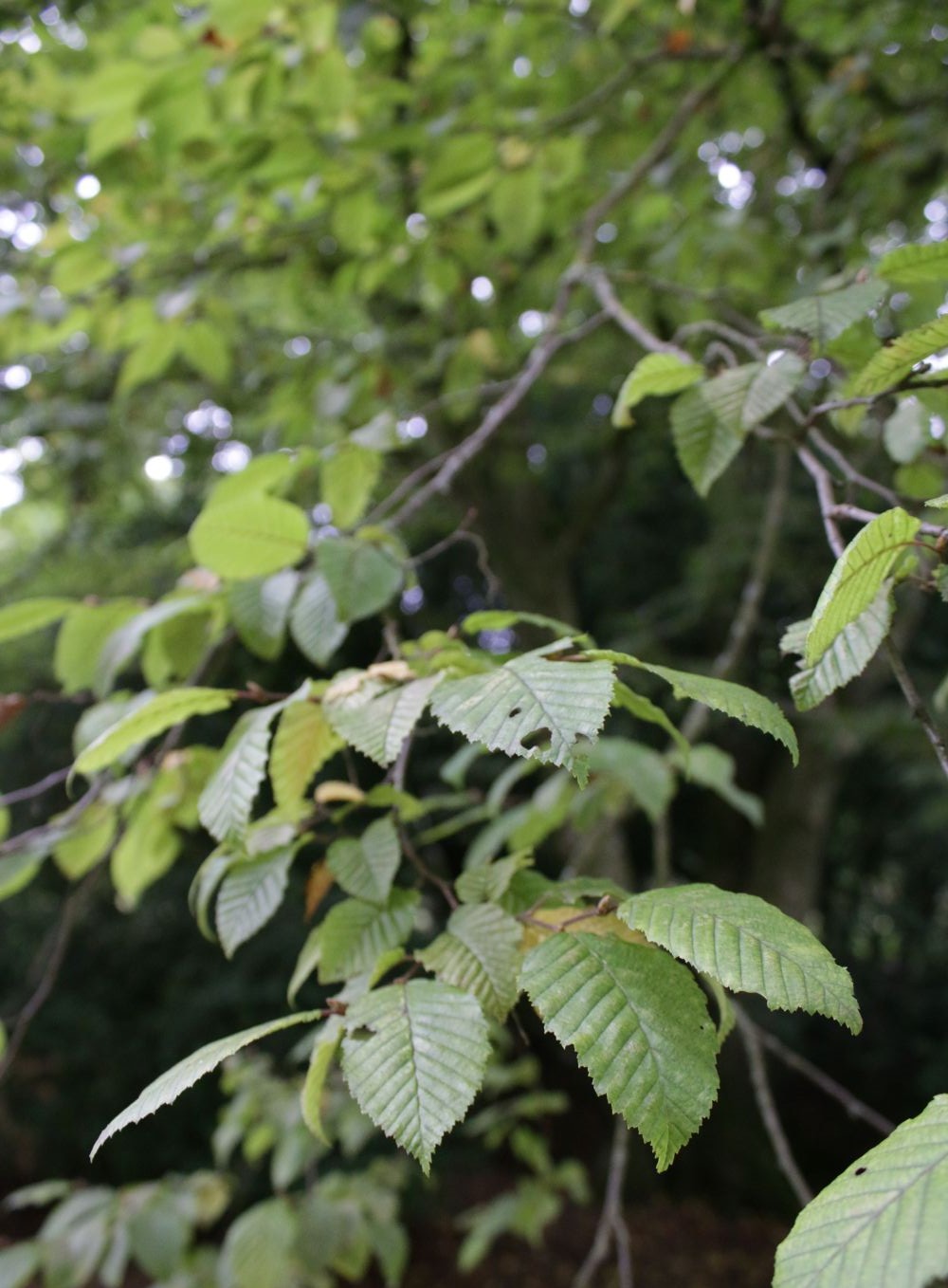
Because it’s so strong, it was traditionally used to make things such as ploughs, wagon wheels, mill cogs and chopping blocks, and coppicers would use smaller growths to make poles or charcoal.
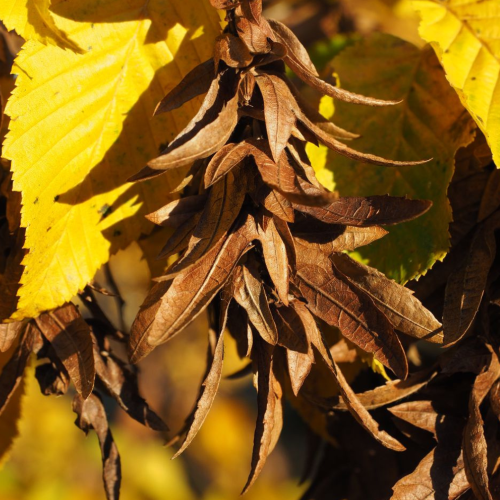
Its seeds are a fantastic food source for wildlife during autumn, but at this time of
year, you may notice some younger trees are still holding their leaves – this is known
as ‘marcescence’.
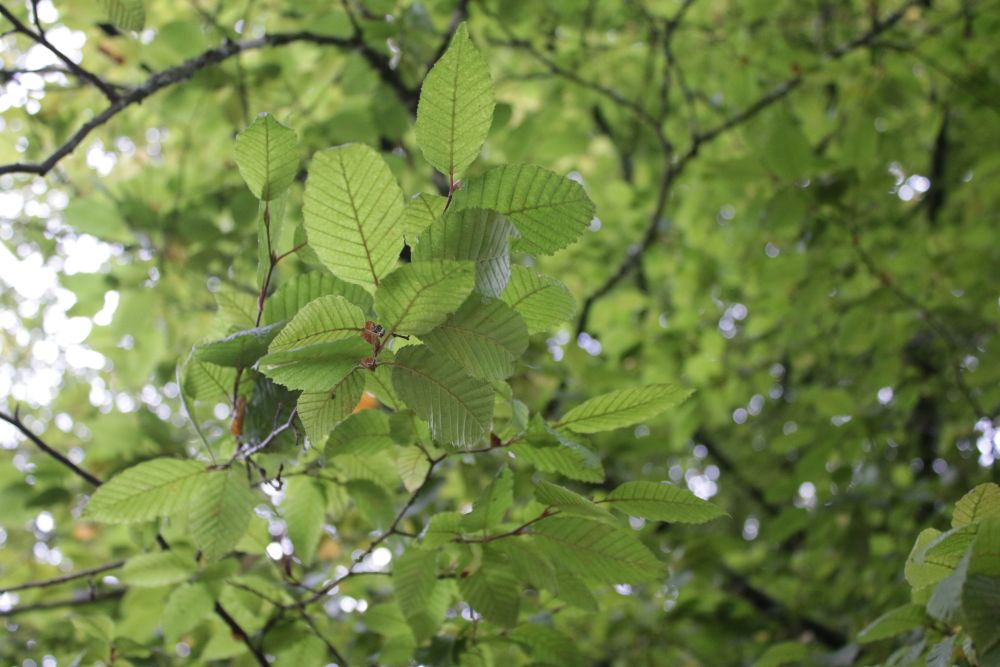
It’s thought this can benefit the trees when they’re smaller, as the dead leaves can insulate new buds from harsh weather and make the tree less palatable to browsing animals such as deer, who would ordinarily pick off the fresh buds. The retained leaves also create shelter and habitat for overwintering birds and invertebrates.
 Young beech trees will also hold their leaves, so it’s easy to mistake them, however
hornbeam leaves have toothed edges, whereas beech leaves are wavy.
Young beech trees will also hold their leaves, so it’s easy to mistake them, however
hornbeam leaves have toothed edges, whereas beech leaves are wavy.